Alyssa Venable, teacher and cofounder
As the first bulbs surprise and delight by changing the landscape overnight, I find myself already nostalgic about our winter “seed school.” The vast stillness, interrupted by the changeable weather – which we were privilged to observe on the giant screen of our horizons. Sounds both mechanical and organic traveling starkly on the prairie wind. Warm rocks against cool skin. Occassional snow in Rock Prairie gave us a glimpse into the animal life we rarely saw – wild rabbit and domestic dog – or coyote – prints, our own cats and chickens too.
But let’s be honest – around October: as the north wind turned cool and rakes and wheelbarrows were in style, I was frantically brainstorming, researching, and hoping fervently we weren’t making a huge mistake. A native of Chicago, I’m weary of cold weather, and I knew it would be my own resilience as well as the students’ that would be strengthened in the coming months. But I pushed onward, dedicated to my families and inspired by the indigenous communities who have practiced outdoor education since time immemorial on these same lands. I was also connecting with an international community of nature preschools, and many were thriving in areas that remain well below freezing temperatures for weeks at a time.
Our onslaught of plans and ideas to tackle winter included wins and losses, but most effective were the wonderfully prepared families. Supporting families’ ability to have their child ready each day for four hours outside no matter the weather was by far the most vital use of my time. And it wasn’t a chore, as the work of communication and collaboration brought us closer as a school community, as well as allowing the students to pass our time in the elements with joy and ease.

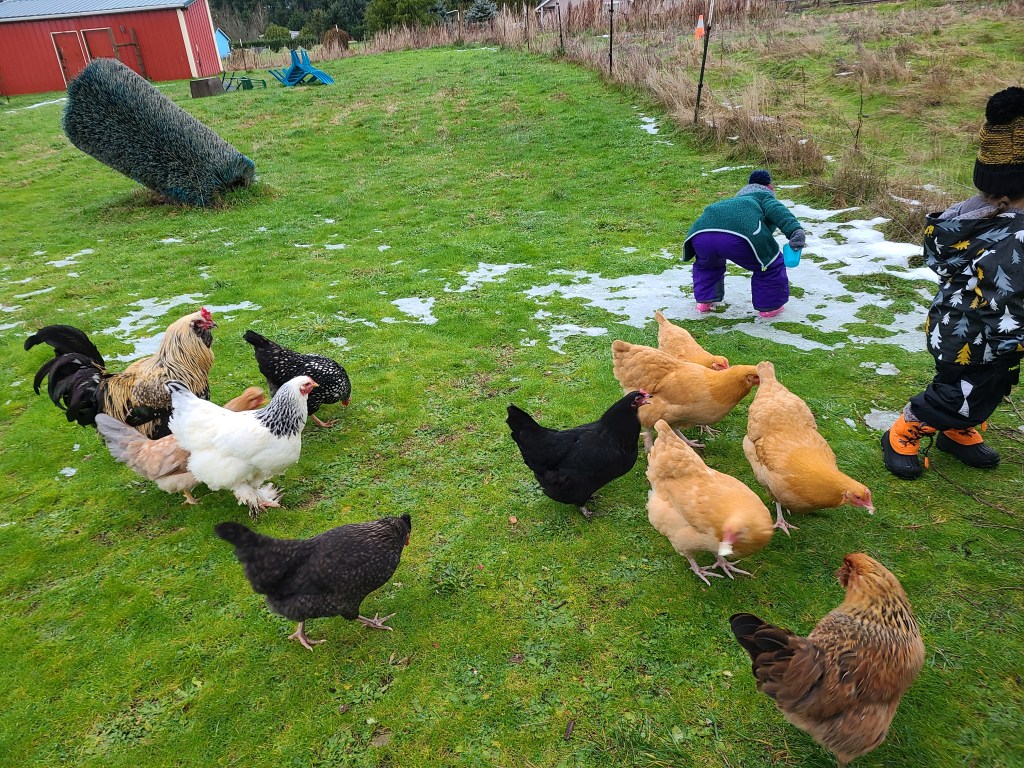


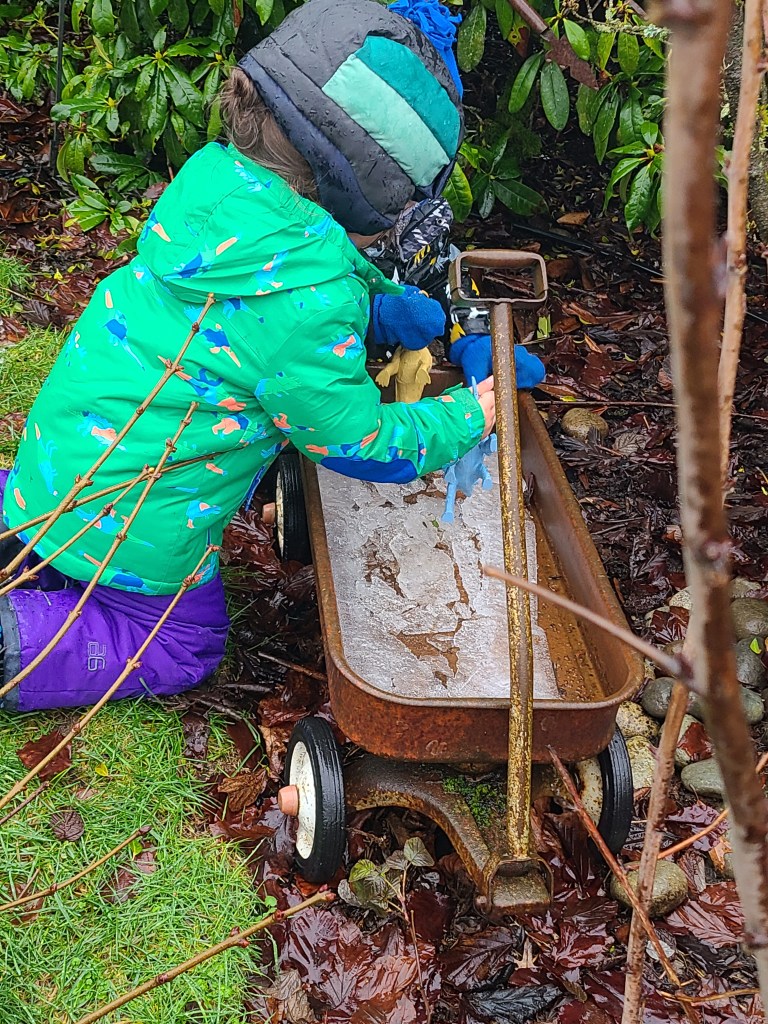

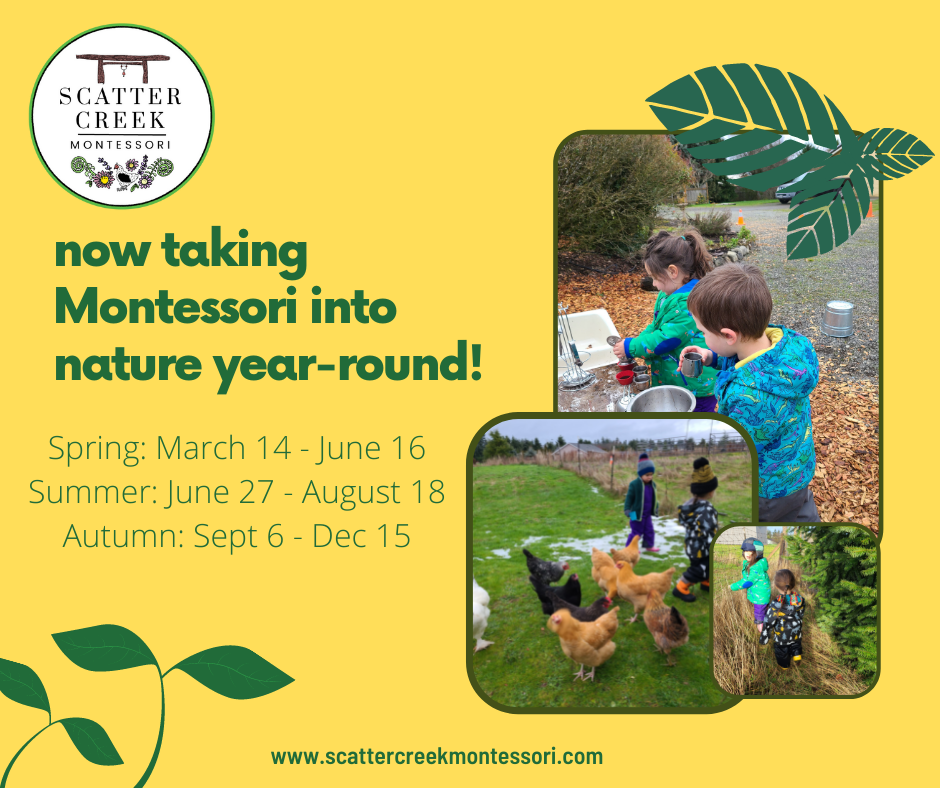
We are excited to announce we are now following a year-round school model, with 46 weeks on, 6 weeks off (breaks spread throughout the year). We believe a year-round model allows young students to form the true peer community they crave. It will also allow learning to build organically, without disruption. The changing seasons is all the dynamic change our young students need.
Is it finally time?
The results are in, and while our nation’s politicians may be reeling from the news in this viral article, many educators are not. We are well aware that the institutionalization of young children causes much more harm than not. Passionate, enlightened educators have long fought to bring awareness to the endless waiting in lines, walking single file through hallways still and silent, using the bathroom and eating on strict schedules, rote memorization, being stripped of choice, being given information instead of opportunities to wonder – I know personally, from my own professors at The Evergreen State College, who fully opened my eyes a decade ago.
Still I am actually reeling in my own way because I just spent five months outside, literally and figuratively. I have been outside of my comfort zone in so many ways, leaving the traditional Montessori schools in which I spent my childhood and my entire teaching career. And everything I’ve been observing and reflecting on these past five months feels even more vital and timely given the results of Vanderbilt’s decades long study.This study has some dark implications for how completely and fully we can fail children when we undermine their natural drive and abilities with adult-centered goals and incorrect assumptions.
As I create my own nature Montesori manifesto, the more I observe, the more my curiosity is unlocked, and the more I want to dig even deeper.
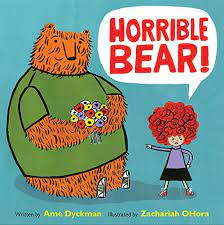
Unfortunately in this strange new world, childhood anxiety is very real. It’s important for educators and parents to see behavoir as communication, and to consider if disruptive behavoir may be heightened anxiety. Books and oral storytelling support the development of language skills, allowing young children to begin to articulate their feelings. Here are some books we read that supported social and emotional reflections around handling big emotions.

This month’s professional development includes a 3-session learning series hosted by Roots and Sky Nature-Based Learning.
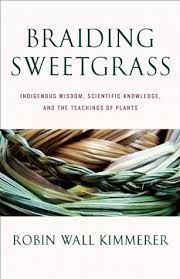
Braiding Sweetgrass guides late winter reflecting as the nature world reawakens around us.
November 14, 2021
Autumn Quarter News
A Note from the Founders
As we prepare for the final week of Autumn Exploration with Alyssa, we are amazed our pilot program is almost over! The farm has proven itself an empowering space where young people thrive – it has truly surpassed our expectations in nurturing confidence, creativity, empathy and so much more! We are filled with purpose and with gratitude for you in supporting our farm school dream.
We are looking ahead at preparing for winter, planning for our year-round calendar, and dreaming of the farm heading to the forest… in our new offering Forest Fridays! These will be child-led family field trip days to our beautiful nearby forests (and wetlands, too!). This winter program we will be offering two opportunities for Forest Friday.
For our first newsletter, we’ve collected a number of resources that have enriched our understanding of the world of Montessori, outdoor education, and beyond. We hope you enjoy!
With love,
Alyssa and Ash
Co-Founders, Scatter Creek Montessori
Alyssa’s Top Ten Outdoor School Works
- Observing! Birds migrating, cycles of life, insect activities, puddles forming and reappearing…
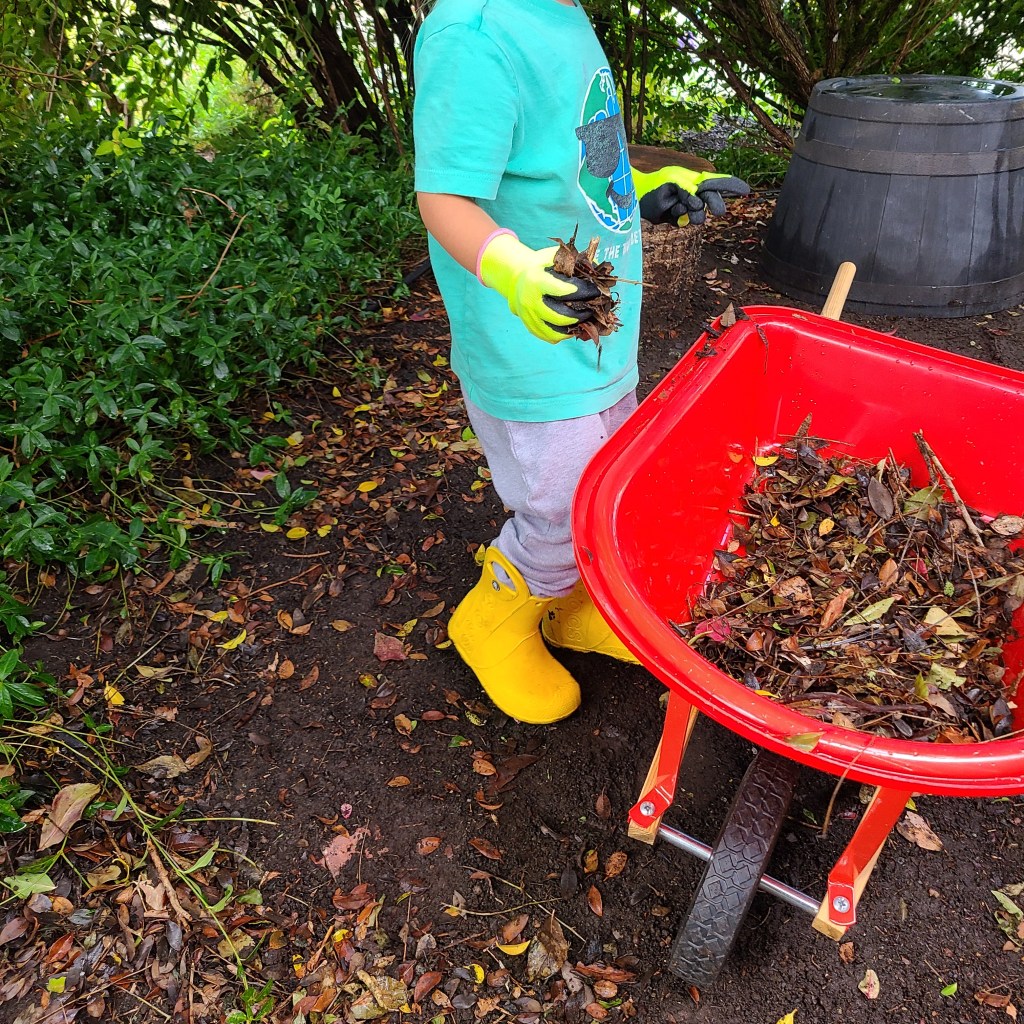
- Raking Leaves and mulching plants with raked leaves
- Digging Rocks and moving them in wheelbarrels
- Mud Kitchen Play – let them discover making mud on their own!
- Making a Mock River when we learned about the salmon life cycle
- Collecting and Measuring Rainfall
- Child-Led Nature Walks – a daily morning activity!
- Collecting Fir Cones to dry and use for crafts – and rabbit treats, too!
- Nature Scavenger Hunts — finding autumn colors, finding seeds, finding edible/inedible food, so much more!
- Collecting Leaves – press, rub or pound them fresh leaves on paper or fabric, dry leaves for artful arrangements
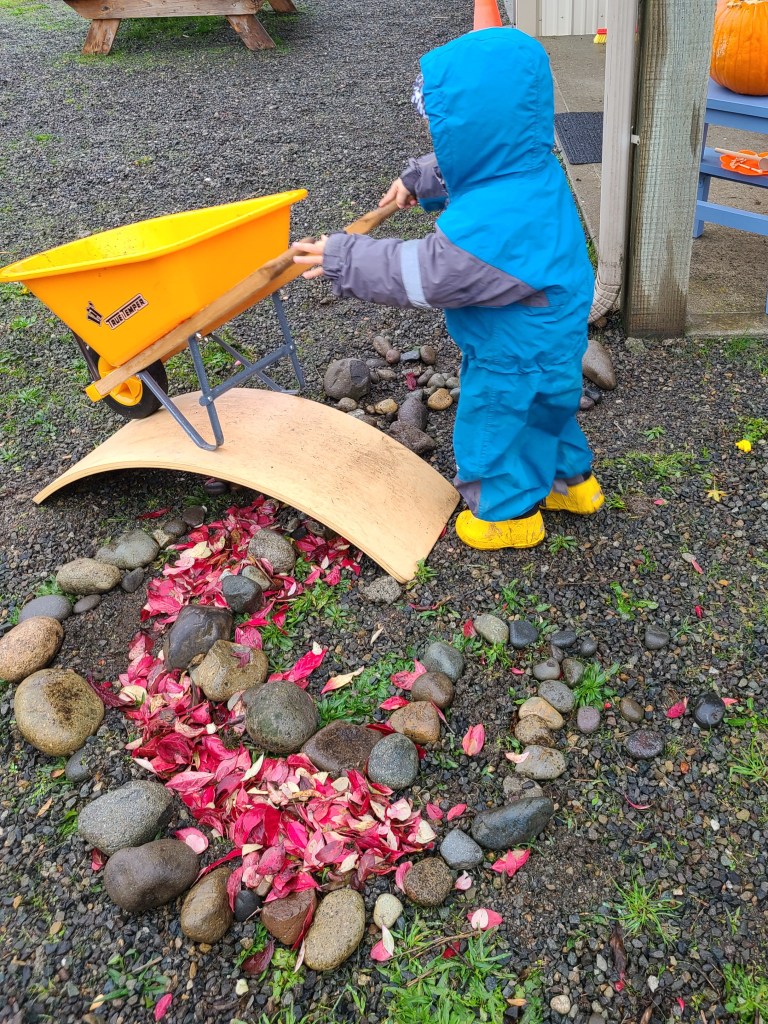

Autumn colors nature scavenger hunt

A Fabulous Work Party
We are so grateful to the wonderful students from undergraduate program ‘In Sickness and In Health’ at The Evergreen State College, our alma mater! These fine folks came for a work party in October. Former teachers Eric Stein and Toska Olsen lead this program, along with the fabulous Arita Balaram, new to TESC. Eric and Toska embrace exploding the traditional education system and ushering in an era of schools and classrooms that empower students to become confident leaders in their environments, and their influences were invaluable as we developed farm preschool.
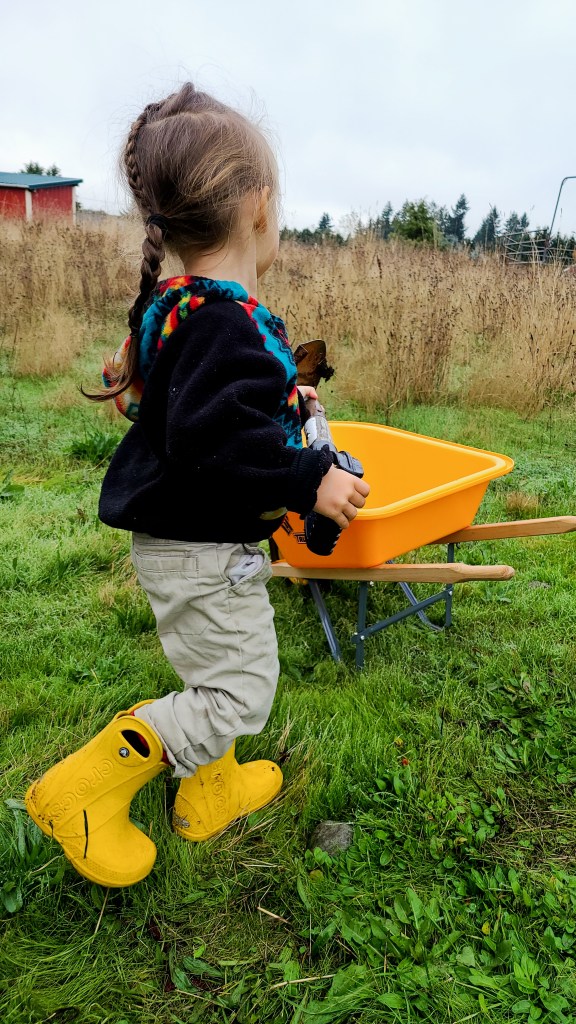
One of the projects the students worked on was painting tires for our new climbing installation. The students love to back up way into the prairie to gain momentum with a running start, launching themselves onto the tires to race across the obstacle. They’re already champions at running over uneven ground and ready for this added challenge: every day they cover the same terrain, walking, running, marching, skipping, even pushing wheelbarrows.
Children are driven to navigate natural land – it’s an added challenge that calls to them as it develops large motor skills and increases confidence! A great article that explores some of the whys behind promoting big movements and new challenges outdoors:
Nothing Ventured, Nothing Gained: Balancing Risks/Benefits in the Outdoors

Nature Preschool Licensing Orientation
Did you know Washington is the first state to create a licensing path for outdoor schools?! SCM has found itself in an amazing community of innovative and determined educators who have spent the last two years in pilot programs to lay the foundation for this exciting and radical licensing opportunity. Best of all, the standards and practices they developed clearly reflect the vital importance of children spending large amounts of time exploring the same wild areas.
On November 2nd, Alyssa attended the third ever nature preschool orientation hosted by the Department of Children and Youth Services (DCYS). SCM becoming a licensed nature preschool would increase access and equity: opening the doors to families using subsidies, enriching grant opportunities, and allowing the option of a longer school day.
The orientation was a productive learning experience and a wonderful chance to network with some fantastic outdoor preschools all around the state! In addition, SCM joined the Washington Nature Preschool Association which has already supplied a wealth of resources for further professional development.
Why Black Parents Should Consider Montessori
One of our values SCM is promoting access and equity. Some ways we are doing this:
- pursuing licensing to allow us to accept families using subsidies
- pursuring licensing to give us more options for government grants, keeping tuition low
- celebrating our homes and cultures through intentional curriculum that does not “other” sudents
- creating a gear lending library to provide quality outdoor-wear to every student
- a portion of each registration fee goes to our equity scholarship “envelope”
- families agree to promote a safe space within which every kind of family is celebrated
In this article by black parent and phd Laura Turner-Essel examines some of the systemic challenges faced by black families in the education system and how Montessori schools can go against those molds.

Spotlight on: Bun Bun
One of our favorite animal guides! This baby-but-growing-quickly-bunny of gender neutral pronouns spent a week in our outdoor classroom this autumn as we learned about rabbits. Bun Bun is great at teaching us responsibility and gentle bodies, and an excellent model of patience and eating lots of veggies.
But wait! Before adopting a rabbit for a classroom or home, adults in the environment need to understand the requirements of these highly intelligent and social creatures. The House Rabbits Society is an invaluable resource for understanding these animals.
Rabbits in the Classroom
We now have a Gear Lending Library!
Thanks to generous donations we have started a gear lending library with sizes from 18 months – 4T, from brands Tuffo and Oakiwear. We highly recommend these brands for waterproof children’s outerwear. The Tuffo Muddy Buddy is a lighterweight rain onesie with some nice bright color options (for spotting those nature-loving kiddos in a prairie, for example). The Oakiwear rainsuit is an amazingly durable, extra warm rainsuit that you could probably swim in without wetting clothing! For winter months, combine a rainsuit with winter coat AND layers for effective outdoor school cold-weather wear.
A gear lending library means we can begin to offer waterproof outerwear to our families at no cost or hassle to them! We’ll even launder rainsuits right here at school, and rainsuits will ‘belong’ to just one student at a time.
About Trauma-Informed Education with Colleen Wilkensen
In this podcase episode, one of Alyssa’s favorite teacher educators Colleen Wilkensen applies the importance of ‘felt safety’ to her trauma-informed approach to education, resulting in a new depth to the ‘why’ behind creating felt safety in all the environments a young child may enter – at home, or at school.
Montessori = Creativity Unleashed with Judi Bauerlein
Alyssa’s beloved Montessori mentor Judi Bauerlein is a wonderful supporter of our school! She is also a two-time Montessori Living Legacy recipient who has been educating students and teachers since 1972. In this video she offers up a truly beautiful insight into the Montessori method in a way only Judi can.
Raising Resiliance with Vanessa Callaghan
We’d also like to recommend Vanessa Callaghan‘s approach to supporting families and youth. Callaghan uses effective peace curriculum-based approaches, such as gratitude practices. Callaghan offers training videos for parents through multiple platforms. Alyssa looks forward to her Monday Mindset emails sent each week. These emails are always full of helpful ideas and opportunities.
Subscribe to Vanessa’s Weekly Email
Indigenous Awareness Month
In closing, we’d like to celebrate Indigenous People’s Awareness Month with two books written for children, but highly suitable for any human. Stolen Words by Melanie Florence is a beautiful story inspired by the author’s own relationship with her grandfather. Giving Thanks: A Native American Good Morning Message inspires wonder and gratitude. It can be powerful to introduce a few pages at a time to younger readers.
For educators who focus on gratitude practices this month, land acknowledgements are where we’re starting as a simple way to show appreciation. Our farm school resides on land occupied for 10,000 years by the Coast Salish, Chehalis, and Cowlitz peoples. We look forward to growing in connection with our local indigenous schools.
Thank you for exploring our first quarterly newsletter. Subscribe below!


 Scatter Creek Montessori